Readers must familiarize themselves with these subtopics to understand the concepts discussed in this chapter. These articles are linked within this chapter, but it may be easier to read them in advance.
EFOGM - video guided missiles
Steel Canopy - protects against top-attack
Munition Countermeasures - jammer vehicles
Infrared Communications - avoids the problems of RF comm
CL-130 Seaplanes - can land almost anywhere
KCH-53 Super Cow - rapid refueling for ground forces
The Tank is Dead - big cannon tanks are obsolete
Where are the Amphibians? - armies need amphibious vehicles
Rhinos - compact heavy armor
Battalion Scout Helicopters - an inexpensive idea to boost combat power
Scout Trucks - civilian trucks are stealthy
Scout Company - manages the chaos
Helltanks - missile-firing tanks
___________________________________________________________
The big change for armies since World War II is that equipment is much bigger and far more capable. The total deployment weight of a US Army armored division is more than a World War II armored corps, and its direct firepower capability is greater as well. The drawback is the logistical demands are enormous, especially fuel requirements that have grown from around 50% of supplies to 70%. The other major change is the appearance of long-range precision guided munitions fired by aircraft, helicopters, artillery, trucks, and from shoulders. Modern armies focus efforts at training and preparing for direct engagements common in World War II. They neglect to address issues that have arisen these past three decades -- lethal long-range precision guided munitions and the fuel sustainment problem.
Air Defense
After most of the Iraqi army was demolished by airpower in 1991, most armies became serious about air defense. Even armies that expect to fight with air superiority must improve their mobile air defense to deal with UAVs, small helicopters, and long-range indirect fire guided missiles like EFOGM. The US Army has little interest in short-range air defense, preferring larger systems like Patriot missiles, which should be controlled at the theater level. It refuses to procure modern Self-Propelled Anti-Aircraft Guns (SPAAGs). These are key weapons on the modern battlefield to destroy threats like: attack aircraft and helicopters, incoming ATGMs, UAV, and infantry with shoulder-fired rockets. SPAAGs are armed with one or two 20-40mm autocannon and some have a few anti-aircraft missiles. Here is a good video overview of modern SPAAGs around the world.
The US Army's primary mobile air defense system is the HMMWV-mounted Avenger with a .50 caliber gun and two four-packs of Stingers. These can be linked to a trailer-mounted radar system called Sentinel, but only if a unit is stationary so an air defense can be set up. Modern air defense systems must have mobile radar to detect threats to moving combat units. Otherwise, UAVs can operate overhead and tiny scout helicopters can direct artillery fire or fire long-range missiles themselves. They will not be detected unless someone in the maneuver unit happens to be looking in their direction with high-powered binoculars. This is nearly impossible on the move.
UAVs and tiny helicopters have a very small infrared signature, so Stingers cannot lock-on easily. The Avenger's .50 caliber (12.7 mm) gun has limited range and no air burst/proximity fuzed ammunition. Without radar warning, they only know a unit is under attack after vehicles begin to explode. That tells them to look around and try to determine what is happening and try to find a target to engage that is within range. To make matters worse, the US Army slashed its limited number of mobile air defense vehicles because most Generals think air defense is just aircraft defense.
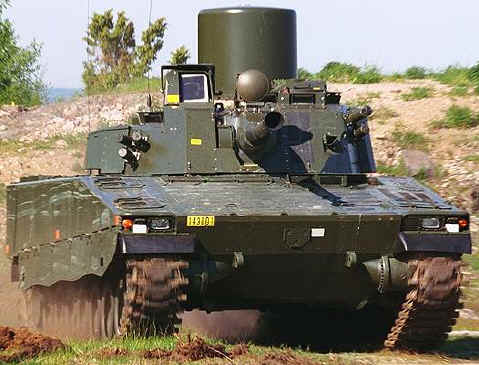 Armored forces must take the air threat
seriously. An excellent SPAAG is the Bofors LVKV90 with a 40mm
automatic gun that can fire five rounds a second. (right) This is designed to fight aircraft, but also
outranges and outguns every armored infantry vehicle and every attack helicopter
gun in the world. United Defense (now BAE Systems) purchased Bofors so there
is no reason why American forces should be denied this air defense
weapon. This weapon
is an effective
anti-tank weapon as well. Rapidly impacting 40mm rounds can penetrate side
armor, damage optical
sights, explode reactive armor, break tracks, and damage the main gun.
Armored forces must take the air threat
seriously. An excellent SPAAG is the Bofors LVKV90 with a 40mm
automatic gun that can fire five rounds a second. (right) This is designed to fight aircraft, but also
outranges and outguns every armored infantry vehicle and every attack helicopter
gun in the world. United Defense (now BAE Systems) purchased Bofors so there
is no reason why American forces should be denied this air defense
weapon. This weapon
is an effective
anti-tank weapon as well. Rapidly impacting 40mm rounds can penetrate side
armor, damage optical
sights, explode reactive armor, break tracks, and damage the main gun.
The LVKV90 carries an impressive 232 rounds and Bofors already makes a variety of modern 40mm munitions, including airburst rounds with a proximity fuze. The US Army deployed Bofors M42 "Duster" 40mm air defense guns to Vietnam during that conflict. Although they were never used against aircraft, they were very effective against infantry. Bofors 40mm AAA guns have proved lethal in urban operations because they can super-elevate to fire at the upper floors of buildings while their 40mm round is the perfect size to fire at buildings. It is big enough to blast through walls without penetrating too deeply into a building causing catastrophic damage, like tank rounds often do. A modern army must have several 40mm AAA weapons organic to all maneuver battalions for air defense, which includes the need to gun down UAVs and tiny scout helicopters the moment they appear, while skeet shooting slow but deadly EFOGMs and whatever sensor-guided munitions appear overhead looking for targets.
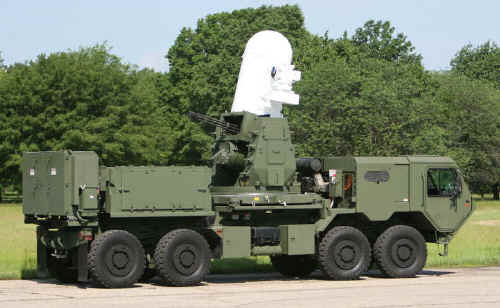 A valuable new weapon is the Centurion C-RAM anti-missile system.
(pictured) This is a mobile ground-based version of the proven ship-based CIWS system that fires a radar-guided 20mm gatling gun. These have proven
successful at shooting down small rockets and mortars in Iraq. It also has an
optical/IR site for manual firing at any target. The US Army deployed
these to forward bases but they should become part of mobile combat units. In
addition, the 12.7mm (50 cal.) machine guns mounted on tanks and APC must be upgraded to multi-role M-197
20mm lightweight gatling guns to provide the range, rate of fire, and
penetrating power to engage aerial threats.
A valuable new weapon is the Centurion C-RAM anti-missile system.
(pictured) This is a mobile ground-based version of the proven ship-based CIWS system that fires a radar-guided 20mm gatling gun. These have proven
successful at shooting down small rockets and mortars in Iraq. It also has an
optical/IR site for manual firing at any target. The US Army deployed
these to forward bases but they should become part of mobile combat units. In
addition, the 12.7mm (50 cal.) machine guns mounted on tanks and APC must be upgraded to multi-role M-197
20mm lightweight gatling guns to provide the range, rate of fire, and
penetrating power to engage aerial threats.
One ignored topic is final defense against incoming sensor guided munitions. A simple step is to install a Steel Canopy atop armored vehicles to shield them. Several Munition Countermeasures vehicles must be organic to all battalions. Finally, an infrared communications system may be installed on armored vehicles to evade RF sensor guided munitions and to prevent targeting by distant RF directional finding equipment. These are important topics, yet there is little discussion or research. Everything is focused on making multi-million dollar vehicles more potent but no effort is made to hide or protect them from sensor guided munitions. This is a mistake since powerful armored forces may become ducks in a shooting gallery during a war with a modern army.
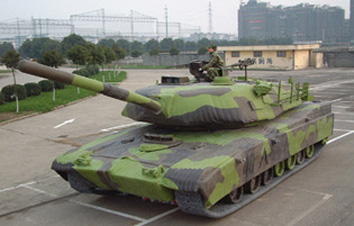 Another method of dealing with deadly sensor guided munitions is with decoys. These were used
extensively during World War II and their value noted after the 1999 air war against Yugoslavia when the US Air Force discovered that most of its
"successful" missions had only destroyed crude decoys. A Chinese
company made a serious effort to develop realistic inflatable decoys. (left)
A five-ton truck can carry a dozen of these decoy tanks that can be inflated in
an hour.
Another method of dealing with deadly sensor guided munitions is with decoys. These were used
extensively during World War II and their value noted after the 1999 air war against Yugoslavia when the US Air Force discovered that most of its
"successful" missions had only destroyed crude decoys. A Chinese
company made a serious effort to develop realistic inflatable decoys. (left)
A five-ton truck can carry a dozen of these decoy tanks that can be inflated in
an hour.
Decoys are more effective now that modern militaries use long-range high-tech sensors, especially at night. A group of inflatable decoy tanks can be hooked up to a small generator that provides electricity to heat up key areas of the decoy with wiring like that used in electric blankets. This will guarantee that it looks like a tank to anyone with an infrared viewer, like EFOGM gunners. If precision-guided munitions prove too deadly for an armored force, it may pause and deploy decoys to encourage an enemy to use up expensive munitions destroying air bags. An army may build fake tanks atop cheap Toyota trucks and send dozens charging around to bewilder an enemy who expends expensive munitions at them.
Decoys can be placed forward of real tanks in defensive positions so an attacking enemy wastes rounds engaging them. Imagine the panic among attacking enemy tankers as they shoot several rounds at a dummy tank and "miss" each time as the projectile passes through. Airmobile units may bring decoys to set up along roads to deter attacks. If enemy aircraft or helicopters are a threat, decoy tanks can be placed in open areas away from regular tanks so the enemy attacks them, rather than searching for and destroying real tanks. Decoys may also be placed as bait by anti-aircraft crews setting a trap. Even when "destroyed" many decoy tanks can be patched and put back into action. Army officers must understand the lethality and range of today's weapons make it essential to include deception in every battle plan. Armies have a limited number of expensive precision-guided munitions so it is best to encourage an enemy to waste them on decoys.
Fuel Sustainment
Chapter 10 addresses the fuel challenge faced during expeditionary operations. A lack of fuel stalled many offensive operations during World War II, yet the US Army burned 12 times more fuel per soldier each day in Iraq than it did in France in 1944. The US Army in Iraq burned nine gallons of fuel per soldier per day in 2004, which was mostly static operational environment. Another problem is that truck fuel tankers are easy to identify and destroy by enemy guerillas, commandos, and aircraft.
A primary focus in designing a future war machine should be improved fuel efficiency. Moving fuel becomes complex because it takes fuel to move fuel, unless pipelines are used. Army trucks may burn more fuel hauling fuel hundreds of miles inland than they deliver. One solution is to include enemy fuel depots as objectives during offensives with plans to tap civilian gas stations. Fuel truck drivers should be trained to test fuel and equipped with hand pumps to scavenge from destroyed vehicles. Another option is limiting the number of huge gas guzzling combat platforms. Chapter 12 discusses how eliminating gas hungry self-propelled howitzers would help open up main supply routes to improve logistical support.
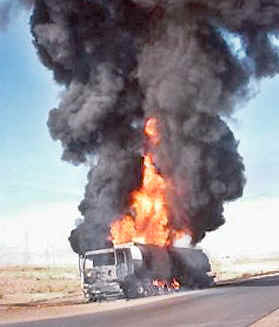 Reducing fuel demand is a key challenge for a
modern military. Soldiers rarely think of
fuel efficiency while driving because no one taught them that rapid acceleration,
sitting idle for several minutes, or driving too slow wastes fuel.
Training must emphasis the fuel problem for armies while sergeants and officers demand fuel efficient
vehicle operation.
Reducing fuel demand is a key challenge for a
modern military. Soldiers rarely think of
fuel efficiency while driving because no one taught them that rapid acceleration,
sitting idle for several minutes, or driving too slow wastes fuel.
Training must emphasis the fuel problem for armies while sergeants and officers demand fuel efficient
vehicle operation.
A second area for improvement is developing more fuel efficient engines. A May 2001 study by the Defense Science Board "More Capable Warfighting Through Reduced Fuel Burden" noted that fuel makes up 70% of the cargo tonnage needed to position the US Army in battle. The study said that if M1A1 tanks were 50% more fuel efficient , the 1990 Persian Gulf War buildup could have been 20% faster and ground forces ready to fight one month sooner. They noted that fuel delivered by ocean tankers cost only around $1 a gallon at the port, but transporting it inland can drive the cost up to $50 a gallon. In Afghanistan, the cost of delivering a gallon of fuel ranged between $400-$800 a gallon.
The gas turbine engine used by the M-1 Abrams tank burns three times more fuel per mile than a diesel equipped tank. This has major strategic implications, but the gas turbine is quieter and provides greater acceleration so Army tankers are reluctant to change. After all, fuel needs are never a problem in a garrison environment. However, fuel is costly, so fuel efficiency also translates to money saved from peacetime training as well. The M-1 tanks need an urgent refit with diesel engines. Another drawback to gas turbine engines is they generate four times more heat, making them magnets for infrared seeking munitions.
In recent years, hybrid diesel-electric engines have appeared in the civilian market. These have two separate power systems so the vehicle runs on either. When a vehicle stops or is moving very slowly, the diesel engine shuts off automatically and the car is powered by a large battery. When the accelerator is pressed demanding a speed of more than five mph, the diesel engine comes on for power. When brakes are applied, that energy is used to recharge the battery. Hybrids are more complex and more expensive, but the fuel savings over years pays for this. This technology has been examined for military use, but has not been adopted due to complexity concerns.
Nevertheless, the simple idea of a larger battery has much merit. This allows an armored vehicle to shut off its engine yet still operate its internal lights, computers, radios, and sensors for hours. This saves much fuel and shutting down an engine allows it to lower its infrared signature. Shutting down engines when idle is something all drivers must be taught. Some Mercedes automobiles have a simple fuel saving device. If the automobile accelerates too quickly, or sits idle too long, a buzz tells the driver he is wasting fuel. This idea can be used for military vehicles.
Fuel planners throughout history have underestimated fuel requirements by using the advertised range of the vehicles to be employed. That range is measured on a paved highway at the ideal cruising speed. Vehicles in combat move at varied speeds over rough terrain and sometimes sit idle with engines running, so they burn twice as much fuel. Another factor is that it takes fuel to move fuel. Fuel required for tanks calculations must include fuel required for truck tankers to haul fuel forward to refuel tanks.
During the 1944 "Battle of the Bulge", American troops were surprised to find many German troops equipped with hoses and hand-cranked fuel pumps. After years of fighting, the Germans learned that it was much easier to scavenge for fuel than hope it arrives from distant rear areas. This is true today, every fuel truck driver should be trained to seek fuel from abandoned vehicles. He should be equipped to test fuel as a precaution against sabotage, and pump it into his tanker. It should be common after every battle for fuel truck drivers to scavenge the battlefield for fuel, like vultures picking over the dead. Whenever a unit decides to abandon a seriously damaged vehicle, a fuel truck driver should immediately suck its fuel out. Units need a marking system using spray paint to indicate to other truck drivers that a vehicle has been tapped.
Offensives are often slowed to allow wheeled refuelers to catch up with tanks. In difficult terrain, wheeled trucks cannot follow tanks, so tanks must retreat to the nearest road for fuel. Aircraft use "drop tanks" to extend range. A similar solution for tracked armored vehicles is to tow extra fuel in trailers for long-range operations. An internal handle can allow the crew to release the trailer at anytime. Perhaps the terrain has become too rough, a major fight has begun and maximum mobility is desired, or the trailer has caught fire. Follow-on logistics units can retrieve such trailers and haul them forward for reuse.
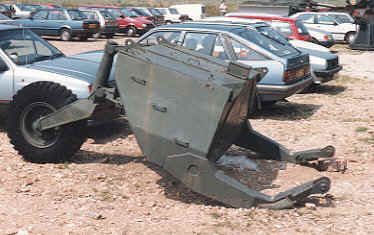 The British developed a trailer for their
Centurion tank. (left) The hot turbine engine used by the American
M-1 tanks poses a problem. However, "towing
shields" already exist for the M-1s. Fuel trailers allow tracked vehicles to
tow fuel over terrain where wheeled trucks cannot venture. In many
cases, tanks may tow the same fuel trailer for an entire campaign. If vehicles must make a long
road march, extra supplies can be strapped atop the fuel tanker. In armies
where trucks routinely tow trailers, it is amazing that tanks haven't their own.
The British developed a trailer for their
Centurion tank. (left) The hot turbine engine used by the American
M-1 tanks poses a problem. However, "towing
shields" already exist for the M-1s. Fuel trailers allow tracked vehicles to
tow fuel over terrain where wheeled trucks cannot venture. In many
cases, tanks may tow the same fuel trailer for an entire campaign. If vehicles must make a long
road march, extra supplies can be strapped atop the fuel tanker. In armies
where trucks routinely tow trailers, it is amazing that tanks haven't their own.
Aerial Resupply
One method to avoid the problems of road supply is using aircraft. This may be essential for tracked vehicles that have climbed through terrain where wheeled trucks cannot follow. In addition, an enemy may cut off a main supply route with a counterattack or by using commandos. Finally, heavy rains can make dirt roads unusable, which saved the Soviet Union from defeat during World War II. Aerial resupply part of the answer, albeit an expensive method. Although helicopters can take-off and land vertically, similar-size fixed-wing aircraft can carry twice their payload at twice their speed four times further. Most of the world has rivers, lakes, and oceans where Seaplanes can land to provide supplies to forward forces.
The new KC-130J can function as a fuel tanker as well as a transport. After landing at austere airfields or roadways, the KC-130J can refuel helicopters, vehicles, and fuel trucks at 600 gallons (2,270 liters) per minute. Additionally, the unique prop feathering capability while the engines are still running offers safer and more hospitable conditions for ground refueling than in the past. The KC-130J has a 57,500 pound (8,455 gallon) fuel offload capacity using wing fuel and external tanks. The aircraft also has the capability to carry an additional 24,392 pounds (3,600 gallons) of fuel in a specially configured internal fuselage tank. This means that a single KC-130J can fully refuel 40 M-1 heavy tanks.
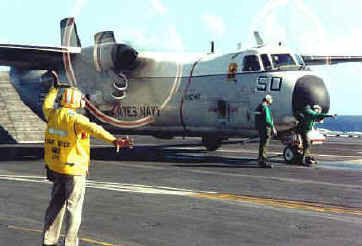 While the US Marine Corps has some KC-130Js, the US Air Force has none to
support the US Army, except a few older and less capable HC-130s to support Army Special Forces. A "KCL-130J" seaplane could provide ground force
commanders with a tremendous capability to support mobile combat forces.
In addition, C-2 Greyhounds (right) allow fuel and supplies to be flown
directly from aircraft carriers to austere runways near mobile ground combat
units. Ship-to-vehicle airmobile refueling eliminates all the personnel and equipment involved in
off-loading fuel from tankers to bladders ashore, transporting the fuel by
truck, plus thousands of soldiers required to provide messing, security, housing
and other needs for the soldiers involved in moving fuel by truck. The US
Army should buy several dozen "KC-2s" for this mission, as well as other C-2 variants
as discussed in Chapter 11.
While the US Marine Corps has some KC-130Js, the US Air Force has none to
support the US Army, except a few older and less capable HC-130s to support Army Special Forces. A "KCL-130J" seaplane could provide ground force
commanders with a tremendous capability to support mobile combat forces.
In addition, C-2 Greyhounds (right) allow fuel and supplies to be flown
directly from aircraft carriers to austere runways near mobile ground combat
units. Ship-to-vehicle airmobile refueling eliminates all the personnel and equipment involved in
off-loading fuel from tankers to bladders ashore, transporting the fuel by
truck, plus thousands of soldiers required to provide messing, security, housing
and other needs for the soldiers involved in moving fuel by truck. The US
Army should buy several dozen "KC-2s" for this mission, as well as other C-2 variants
as discussed in Chapter 11.
Heavy lift helicopters are another option and some should be configured as tankers as a KCH-53 Super Cow. This option allows fuel to be moved from ships offshore directly to units on the frontlines, bypassing vulnerable and congested port areas and roadways. One reason Rommel was able to dash across Africa during World War II was because fuel was flown directly to frontline units from Italy. Recall that allied armies ran out of fuel in late 1944 as they approached the German border. Fuel was trucked from distant Normandy since the Germans held on at French ports. Had the allies flown fuel directly across the English Channel to allied armor at the German border that war may have ended much sooner. Keep in mind that modern aircraft can carry many times more fuel than the transports from that war.
Tracked Supply Vehicles
In 1948, famous British military historian B. H. Liddell Hart wrote about his post-war interviews with German Generals in a book "The German Generals Talk". In Chapter 8 he writes about the 1941 German invasion of the Soviet Union: "The Germans lost the chance of victory because they had based their mobility on wheels instead of on tracks. On these mud-roads the wheeled transport was bogged when the tanks could move on. Panzer forces with tracked transport might have overrun Russia's vital centres long before autumn, despite the bad roads. World War I had shown this need to anyone who used his eyes and his imagination."
He later wrote that even though the German army was modern, "it had not yet caught up with ideas that were twenty years old." Apparently, the US Army will relearn lessons that are now 90 years old since it has few tracked resupply vehicles for its armored forces. This is very important for the M-1 tank, whose gas turbine engine burns three times more fuel per mile than traditional diesels, and only carries 40 rounds for its 120mm main gun. Tank commanders will not push forward if they are low on fuel or have only five rounds left.
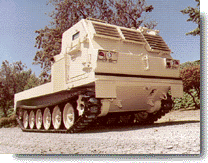 Two
M113 armored personnel carrier variants have been modified for logistical
support, the XM1108 (left) and the M548A3 (below), yet these are found in just a few support units.
The larger Bradley with its powerful engine should be modified as a cargo variant. Some
may be fitted
with a removable tank, making it easy to shift from water to fuel to cargo depending
on the tactical situation.
Two
M113 armored personnel carrier variants have been modified for logistical
support, the XM1108 (left) and the M548A3 (below), yet these are found in just a few support units.
The larger Bradley with its powerful engine should be modified as a cargo variant. Some
may be fitted
with a removable tank, making it easy to shift from water to fuel to cargo depending
on the tactical situation.
If an army wants truly mobile armored forces, it needs some tracked logistics vehicles. A "log" company may consist of 32 tracked vehicles: ten fuel, eight ammo, four maintenance, two rescue, two engineer, two water purification, two water tankers, and two tank retrievers. The rescue variants can pull up to a damaged vehicle in combat to extinguish fires and allow medics in fireproof suits to save wounded. During World War II, it was common for mechanics to repair tanks while engagements continued, something a maintenance variant allows. Armored tracked maintenance variants can pull up to vehicles minutes after they are immobilized by breakdowns or enemy fire.
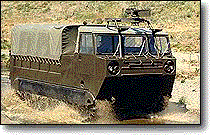 Whenever a
force halts near a water
source, the two water purification units start producing water to refill the two
water tankers. It is important for these vehicles to be tracked because
they must leave roads to reach water sources, which are often along muddy river
banks. The water tankers should be capable of firefighting to assist
the maintenance and rescue vehicles. The US Army lost dozens of
expensive tanks in Iraq after a minor RPG hit started a small fire in the engine
compartment. Since no firefighting vehicles were nearby, the fire spread until it engulfed and destroyed the entire tank.
Whenever a
force halts near a water
source, the two water purification units start producing water to refill the two
water tankers. It is important for these vehicles to be tracked because
they must leave roads to reach water sources, which are often along muddy river
banks. The water tankers should be capable of firefighting to assist
the maintenance and rescue vehicles. The US Army lost dozens of
expensive tanks in Iraq after a minor RPG hit started a small fire in the engine
compartment. Since no firefighting vehicles were nearby, the fire spread until it engulfed and destroyed the entire tank.
Tank retrievers can pull out stuck vehicles or tow damaged or broke down vehicles until a column halts where they can be fixed, or at least tow them to a nearby road where follow-on units can find and fix them. The fuel tankers should scavenge for fuel at every opportunity. The ammo vehicles should be designed so that ammo can be rapidly passed while under artillery or sniper fire, probably using a conveyor belt system on a movable boom that carries ammo from inside the vehicle right up to a hatch.
This log company is too small to resupply an entire battalion at once, but can immediately support key elements near enemy forces. Tracked vehicles can then dash to the rear to load more supplies from forward depots or trucks they encounter. This is far better than requiring combat vehicles to withdraw to the nearest road in rough or muddy terrain. Each vehicle should have at least a two-man crew, both trained as drivers, to double utilization when required since one can sleep while the other drives. Tracked vehicle resupply can boost the combat power of armored units by providing them supplies and support to keep them in action.
Tanks Are Obsolete
The Tank is Dead! Whenever someone suggests this, tankers proclaim this has been predicted for years and the answer is always no, mostly because no battles between modern armies have occurred for decades. But some questioned the value of horse cavalry for years before combat proved them obsolete. The Polish army still had horse cavalry units at the beginning of World War II!
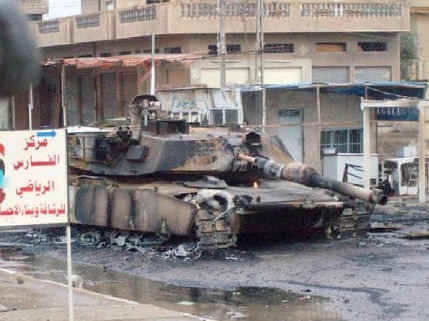 Precision guided weaponry has made
tanks obsolete. Over a hundred mighty M-1 tanks were destroyed
during skirmishes in Iraq. There are situations where tanks are valuable,
such as mopping up scattered infantry who lack anti-tank weaponry. In situations where an
army has no choice but to conduct a bloody frontal assault against prepared
enemy positions, tanks can lead the way. They may suffer heavily since infantry
cannot fight alongside modern tanks due to the blast from their big gun, but tanks
can break through a prepared enemy defensive position. On the other hand, small,
heavily armored Rhinos
can also perform this mission at a far lower cost.
Precision guided weaponry has made
tanks obsolete. Over a hundred mighty M-1 tanks were destroyed
during skirmishes in Iraq. There are situations where tanks are valuable,
such as mopping up scattered infantry who lack anti-tank weaponry. In situations where an
army has no choice but to conduct a bloody frontal assault against prepared
enemy positions, tanks can lead the way. They may suffer heavily since infantry
cannot fight alongside modern tanks due to the blast from their big gun, but tanks
can break through a prepared enemy defensive position. On the other hand, small,
heavily armored Rhinos
can also perform this mission at a far lower cost.
Heavy tanks are poor platforms to "blitzkrieg" into an enemy rear since they burn much fuel, require heavy bridges, and get stuck in soft earth. Today's APCs are the size of main battle tanks of World War II. The heavy American M-1 tank burns tremendous fuel with its gas turbine engine and only becomes heavier with each upgrade. Tanks need a canopy to survive on today's battlefields, but these can't protect its rear and flanks. Reactive "exploding" armor is one solution, but can be triggered by bullets and endanger infantrymen. Advanced systems like Trophy are interesting, but only work well in test conditions or low level combat. In a real fight those systems would detect everything in the air and shoot off wounding infantrymen and expending themselves quickly, while just a rifle bullet can disable the exposed entire system.
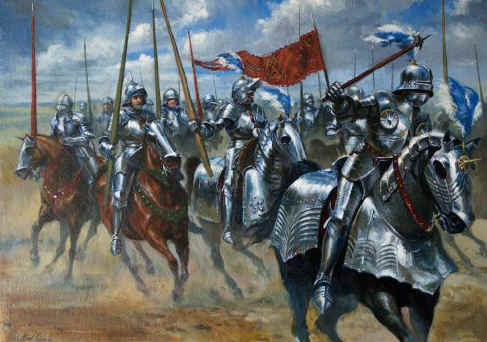 Heavy tanks have become like
knights when long bows and guns were invented. They look impressive but are easy to kill. Unless a new revolutionary
armor is developed, tanks cannot be fully protected from all six angles
of attack. Far too much funding is directed for these platforms,
which now cost ~$10 million each, burn massive amounts of fuel and frequently break down. Heavy tanks should
be phased out and replaced by Rhinos, SPAAGs, and Helltanks.
Heavy tanks have become like
knights when long bows and guns were invented. They look impressive but are easy to kill. Unless a new revolutionary
armor is developed, tanks cannot be fully protected from all six angles
of attack. Far too much funding is directed for these platforms,
which now cost ~$10 million each, burn massive amounts of fuel and frequently break down. Heavy tanks should
be phased out and replaced by Rhinos, SPAAGs, and Helltanks.
The US Marine Corps once fielded an amazing LAV-AD system fitted with an electric turret mounting a GAU-12 Equalizer 25 mm gatling cannon, and two missile pods each with 4× FIM-92 Stinger missiles for Short Range Air Defense (SHORAD) duties. Capacity for 990 rounds of 25 mm ammunition, and 16 (including 8 reload rounds) FIM-92 Stinger missiles. The Marine Corps conducted tests long ago that proved this 25mm gatling gun can pulverize tanks. This is an outstanding choice for medium-weight multi-role Helltanks. Gatling gunners just point and spray knowing that a few rounds will impact the enemy, who can only cower and wait for the metal hailstorm to end.
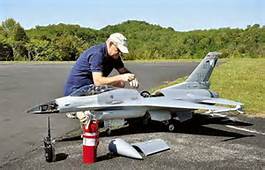 Retaining some heavy tanks is
reasonable until Rhinos are fielded because most armies have large numbers of them. They are great for chasing away militia lacking modern
anti-tank weaponry. However, recent battles between M-1 tanks and poorly trained
Iraqi and Yemeni insurgents show that even older anti-tank weapons can easily
knock out modern tanks. Armies should stop spending huge sums on heavy
tanks and focus on new weaponry like "suicide micro
drones." Hobbyists now fly a variety of UAVs that only cost $500 but can
fly over 150mph and carry 20lbs of payload. It is simple to fit a warhead on
these and crash them into targets. Defense contractors have shown no interest in
these simple, inexpensive weapons that would generate little profit.
Retaining some heavy tanks is
reasonable until Rhinos are fielded because most armies have large numbers of them. They are great for chasing away militia lacking modern
anti-tank weaponry. However, recent battles between M-1 tanks and poorly trained
Iraqi and Yemeni insurgents show that even older anti-tank weapons can easily
knock out modern tanks. Armies should stop spending huge sums on heavy
tanks and focus on new weaponry like "suicide micro
drones." Hobbyists now fly a variety of UAVs that only cost $500 but can
fly over 150mph and carry 20lbs of payload. It is simple to fit a warhead on
these and crash them into targets. Defense contractors have shown no interest in
these simple, inexpensive weapons that would generate little profit.
Light Tanks and APCs
The US Army has "Stryker"
brigades to fill the need for light armor to act like cavalry. Their main armament
is an
awkward roof-mounted remote-controlled .50 caliber (12.7mm) machine gun.
A far superior cavalry vehicle is the superb Swedish Bofors
CV90 family of vehicles. These went
into production in 1993 and have proven popular with all Nordic nations.
There are several variants that use the same chassis and engine that can be manufactured under
license in the USA. Minor modifications may incorporate the latest American
communications and target acquisition technology and American diesel engines. 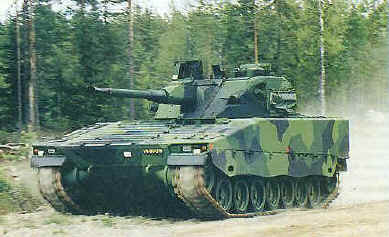
This family of vehicles with highly sloped armor and a 40mm automatic cannon (left) can replace the lightly armed Stryker and eventually replace the Bradley, a good vehicle but with a fat Sherman tank profile and just a 25mm gun. CV90s can later replace most of the M-113s that may convert to tracked logistics vehicles. If the US Army replaces these three separate types with the CV90 family of common chassis and engines, support costs will fall sharply while firepower increases dramatically.
Combat Organization
Douglas Macgregor's book "Breaking the Phalanx" was published in 1997 and presented a bold plan to reorganize the US Army's ten 15,000-man active-duty divisions into more mobile and flexible 5000-man "Groups." The Army's chief complaint was that decades of division tradition and esprit would be destroyed. However, modern divisions are much more powerful than World War II divisions, consume far more supplies, and even require more manpower despite labor saving devices like computers and forklifts. This is because new technology added over the years grew these divisions. Once Army divisions added all the support attachments they wanted for the 1991 invasion of Iraq, divisions crossed the line of departure with over 22,000 soldiers each!
 Macgregor's book provides details into the exact
organization of his "Groups," which are reinforced brigades capable of
independent operations. Macgregor overlooked the need for
infantry made up of foot soldiers, what the US Army calls "light infantry." These soldiers
are not needed
to fight as a maneuver unit, but to guard ports, airfields, POWs, bridges,
and headquarters. They may also serve as military police and provide a labor
pool for engineer units. In an emergency, foot infantry units may be disbanded to provide
personnel replacements for maneuver units. In some situations, they can provide
infantry units to augment armored forces involved in nasty urban fighting.
Overall, they retain the "grunt" tradition of getting all
unwanted missions. They would rarely participate in large peacetime
maneuvers, but focus on the basic infantry skills needed for their supporting
role. Without foot infantry, many highly trained and expensively
equipped maneuver battalions will find themselves assigned to perform these
essential tasks.
Macgregor's book provides details into the exact
organization of his "Groups," which are reinforced brigades capable of
independent operations. Macgregor overlooked the need for
infantry made up of foot soldiers, what the US Army calls "light infantry." These soldiers
are not needed
to fight as a maneuver unit, but to guard ports, airfields, POWs, bridges,
and headquarters. They may also serve as military police and provide a labor
pool for engineer units. In an emergency, foot infantry units may be disbanded to provide
personnel replacements for maneuver units. In some situations, they can provide
infantry units to augment armored forces involved in nasty urban fighting.
Overall, they retain the "grunt" tradition of getting all
unwanted missions. They would rarely participate in large peacetime
maneuvers, but focus on the basic infantry skills needed for their supporting
role. Without foot infantry, many highly trained and expensively
equipped maneuver battalions will find themselves assigned to perform these
essential tasks.
In 2005, the US Army adopted some of Macgregor's ideas with the formation of modular brigades. However, his idea of saving manpower and overhead by eliminating the division layer of command was rejected by traditionalist Generals. A better option is to eliminate the brigade level of command to allow a division headquarters to command independent battalions. This allows greater dispersion and more flexibility. Battalions should be the basic combat unit since management studies conclude that organizations become difficult to control when they exceed 1000 personnel. Macgregor suggested heavy brigades with 5000 soldiers and 123 heavy tanks! A unit that size is a logistical monster. In addition, longer range weaponry provides too much overlap for brigade operations. Controlling combat battalions directly from a division headquarters is superior and eliminates the brigade layer of command.
A modern division headquarters is much larger than in past wars. Computers are great but require lots of electricity that require lots of fuel for generators. Long-range precision guided munitions exist and a division headquarters is a prime target as it generates radio traffic. Since headquarters are essential, dual HQs are vital in case one is destroyed. Dual headquarters are also needed if a division wishes to fight around the clock. This becomes evident even in peacetime exercises as problems develop because staffers need time to eat, sleep and for personnel matters. They eventually split into two shifts for this reason.
Splitting a headquarters into two ad hoc shifts results in manning shortfalls, and a single guided missile may wipe out everything. At least two independent division command elements are needed to operate different shifts since it may take days to move a division headquarters. In this proposed structure, three division command companies are best since the brigade command elements would no longer exist. In some operations, a few battalions may be required to operate separately from the main division body for a few days making coordination difficult. In those situations, one command company can function as a brigade headquarters.
Therefore, the best command structure for a modern division headquarters are three separate and identical command companies each led by a brigadier general and capable of coordinating the entire division. This would ensure effective division command with redundancy for 24/7 operations, relocations, separate task forces, and in cases of attack. Command and control could switch instantly among these three dispersed companies as they rotate command responsibility. Since these command companies are prime targets for attack, each should have an air defense platoon for security.
=Division Headquarters Battalion
- H&S Company
- Scout Company
- Command Company A
- Command Company B
- Command Company C
Each combat division should have 2-12 combat battalions plus various logistical support battalions. Divisions will be generic with no type name, like Armored, Airborne, or Infantry. They will just be numbered, like the 1st Army Division. The assigned battalions will be "plug and play" to allow tremendous flexibility to quickly change composition. This also works well for battalion overseas unit rotation schemes.
Proposed Combat Battalions
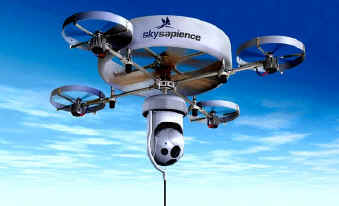 Each combat battalion includes a Headquarters and Service (H&S) company. Most have a
Scout Company with a Scout
Helicopter platoon with four tiny helos, and eleven other squads mounted
on light trucks.
Other trucks have surveillance
equipment like an electric kite (pictured), which is a UAV tethered to a vehicle
to provide stability, a secure data link, and electric power so it can stay "on station"
forever, like a kite. Scout squads also serve as the battalion fire support coordinators
to include FOs for mortars in the weapons company. Overall, the Scout company provides extended security for a
battalion and advance warning of enemy forces, while destroying enemy
recon/scout units and acting as forward observers to coordinate fire support.
Each combat battalion includes a Headquarters and Service (H&S) company. Most have a
Scout Company with a Scout
Helicopter platoon with four tiny helos, and eleven other squads mounted
on light trucks.
Other trucks have surveillance
equipment like an electric kite (pictured), which is a UAV tethered to a vehicle
to provide stability, a secure data link, and electric power so it can stay "on station"
forever, like a kite. Scout squads also serve as the battalion fire support coordinators
to include FOs for mortars in the weapons company. Overall, the Scout company provides extended security for a
battalion and advance warning of enemy forces, while destroying enemy
recon/scout units and acting as forward observers to coordinate fire support.
Most battalions have a weapons company with different mixes of weaponry; such as 120mm mortars and precision missiles like E-FOGM, Hellfire, Javelin, Spike, Humraam, and Sidewinder. Some of these soldiers will be "missileers" trained to fire a dozen types of shoulder-fired and pedestal mounted missiles. When they deploy, they are equipped with the best missile for each mission. They also employ a variety of suicide micro-drones that can search for and crash into targets. Combat battalions may be equipped with wheeled or tracked vehicles depending war plans. Here are the types:
=Armored Battalion
- H&S Company
- Scout Company
- Mechanized Company x 2 (Rhinos with Infantry)
- Weapons Company (SPAAGs, Helltanks)
- 120mm Mortar Battery
In situations where an enemy must be expelled from entrenched positions, the armored battalion will lead the way.
= Cavalry Battalion
- H&S Company
- Scout Company
- Cavalry Company x 2
- Deception Company
(The US Army likes traditional names like squadron and troop, but this confuses everyone)
Scout company soldiers from any battalion are the first to engage enemy forces and call for air and artillery support. The cavalry arrives next to test enemy strength. Cavalry companies are similar to Armored companies, except the Rhinos are replaced by Bradley M3 Helltanks or LV90s. If enemy resistance remains, more artillery fire or the AirCav is called upon. These will route an enemy in most cases. If an enemy remains in fortified positions or urban areas, armored, infantry and engineer units are requested to engage in a nasty close contact battle.
The primary advantage of Cavalry battalions is they may be sent charging forth at top speed to a distant objective. While they lack the armor to assault prepared defenses, they can repel a heavy tank assault, at least until an AirCav battalion or Artillery battalion can demolish the force. Cavalry battalions will be the most numerous in combat divisions as they are the most flexible multi-purpose formation.
Should a large enemy armored force advance, scout platoons would coordinate air and artillery fires while a cavalry battalion prepares to engage. While Division defensive plans are developed, cavalry battalions can confuse and exhaust a division sized armored force with its Deception company. This company can simulate an entire division with over 100 (inflatable) tanks and APCs. They may wear fake division patches and simulate large scale radio traffic. These can be mixed among actual cavalry units to provide realism.
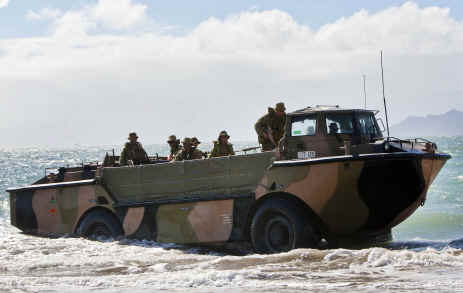 = Amphibious Battalion
- H&S Company
- Scout Company (with amphib scout trucks)
- Amphib Cavalry Company x 2
- Amphib Truck Company (LARCs pictured)
These are equipped like cavalry but are entirely amphibious. This is not just for amphibious invasions; they can drive off ships near shore and land anywhere. They can dash across rivers, lakes, marshes, and bays. In difficult terrain, they can use rivers as highways or outflank an enemy by conducting a seaside envelopment. This amphibious capability will continually surprise enemy commanders who didn't think a unit could outflank him in that manner.
The US Army has no such capability today. Opposed river crossings are to be assaulted using rubber boats! Defenses against the US Army's armored units can be concentrated around bridges and areas where terrain restricts tanks to roads. Amphibious battalions would not only have amtracks, but amphib trucks (pictured) and amphib scout vehicles. This battalion has its own amphib truck company since regular trucks may not be able to provide support. Most divisions would have at least one amphib battalion because they function as cavalry as well.
= Security Battalion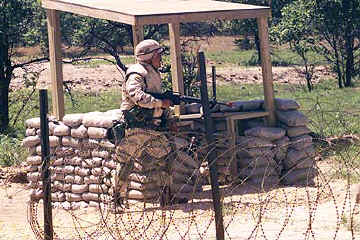
- H&S Company
- Security Company x 3
- Military Police Company
The need for light "foot" infantry is great. Security battalions are light infantry with light trucks whose soldiers operate at the company level. Whenever a major war occurs, Generals quickly realize they need troops to guard airfields, ports, bridges, and equipment caches, not just from commandos but from local thieves. Headquarters need security and senior officers and VIPs need personal security. Without security battalions to provide manpower, combat maneuver battalions are drained.
Each division needs at least one Security battalion just for rear area security and may need more to deal with enemy prisoners and local civilian control. An entire battalion will be required to protect each airbase where billions of dollars of aircraft are parked. A modern enemy will have an excellent commando force, so all ports and vital facilities must be guarded. This manpower may be needed to help engineers dig bunkers and fill sandbags.
Security battalions can also fill the overlooked need for instant replacements. During a serious war, manpower systems often fail to supply needed replacements on a timely basis and combat maneuver brigades become seriously undermanned and less effective. Therefore, a Security battalion may be disbanded and their soldiers distributed. Security units require little equipment so are ideal for reserve units since their primary cost is manpower. Five reserve light infantry battalions can be maintained for the cost of one active duty. In contrast, equipment intensive units like armored battalions provide a cost savings of just two reserve for each active duty unit. Most US Army National Guard (ARNG) battalions should be security or infantry battalions.
= Infantry Battalion
- H&S Company
- Rifle Company x 4
- Weapons Company (with Rhinos)
Most important battles will be fought in cities where armored forces perform well, but they can't enter most areas. Infantry battalions should have four companies for prolonged engagements to fight in an Infantry Square. Some ARNG battalions may be designated for specific infantry missions with special equipment. For example, a mountain battalion in Colorado or an arctic battalion in Alaska. There may be POW battalions trained in the complexities of caring for prisoners.
One of the wrong "lessons learned" from Iraq is that all infantry must be protected by armored vehicles. That is true in some counterinsurgency operations, but insurgencies do not mushroom overnight. It may be nice if all had heavy, expensive armored vehicles to use, but that adds a tremendous logistical burden and slows their movement into and within Theater. Cavalry units will be available if needed. If an invading force transitions to an long-term occupation force, infantry units can be equipped with armored vehicles as needed.
= Combat Engineer Battalion 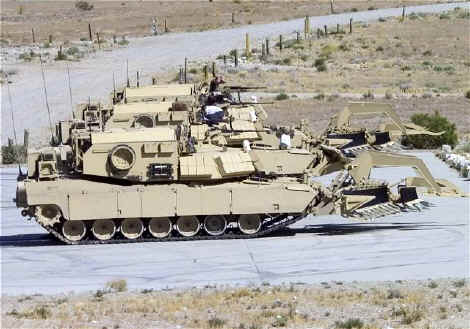
- H&S Company
- Explosive Ordnance Company (demolitions, mining, demining, EDO)
- Roadway Company - AVLBs, dozers, M-88s
- Sapper Company - flame Rhinos, ABVs (pictured)
- Water Company
A military has two distinct type of engineers. Some units are designed to construct things, but others are combat engineers who perform odd combat tasks. Most divisions need combat engineers equipped and trained for instant construction or destruction. Explosive Ordnance soldiers dispose of explosive devices, which also include enemy mines, and employ explosives to destroy things, like bridges. The Roadway company is expected to clear debris and fill bomb craters and big potholes to keep roads open. It may deploy matting in muddy areas or to create landing pads. Officers are trained to evaluate bridge strength for vehicle use, and their soldiers operate the self-mobile and instantly deployable AVLB ribbon bridges and M-88 tank retrievers.
The Sapper company could be called a breach company with equipment designed to break through enemy defenses. Finally, the water company ensures that potable water is produced near frontline units to eliminate the need to haul water from the rear as a supply item. During the Iraq occupation, American Generals where surprised to learn that 30% of the daily supply tonnage was bottled water hauled in from Kuwait! These are all important roles, but since needs vary, these engineers will often be tasked with various other duties.
= Artillery Battalion
- H&S Company
- EFOGM Battery
- Rocket Battery (70mm rocket pods)
- 120mm Mortar Battery (light truck)
- 120mm Mortar Battery (armored)
Lumbering, complex, expensive, and slow firing howitzers are obsolete. They are replaced by superior systems that require far less fuel and manpower, as explained in Chapter 11. Some of these systems are also found in the weapons company of some maneuver battalions.
= AirCav Battalion
- H&S Company
- Scout Company
- AirCav Company x 3 - each with 42 helicopter horses
- Maintenance and Ordnance Company
The employment of dozens of tiny helicopters as swarms is explained in Chapter 8. Each division needs at least one because their Maintenance and Ordnance company will also help support the four scout helos found in each battalion Scout Company
Aviation Brigades
Helicopters are great, but numbers and types depend on what an army can afford and the air defense threat they face. As discussed in Chapter 8, expensive helicopters are very vulnerable to air defense weaponry and operations must be restricted to secure areas or low intensity environments. Combat battalions should have tiny scout helicopters for direct support that move with their battalions. All other helicopters should be organized into aviation brigades to maximize training and maintenance. It is impractical to expect modern helicopters to advance alongside maneuver units. It is not just a matter of airfields, but their fuel, ammunition, and maintenance requirements are substantial. However, establishing forward arming and refueling points are essential, and the idea of keeping combat-ready helicopters "on station" by landing them in a secure forward area is a good idea for medevac and attack helicopters.
Aviation brigades exist at the Corps-level and normally consist of the same type of helicopter. Specific aviation battalions may be attached to specific ground combat units for extended periods to increase coordination and responsiveness. Task organized composite aviation brigades may be created to support specific operations. In some cases, composite aviation battalions may be formed to support smaller units in remote areas organized for the specific task assigned. The US Marine Corps routinely forms composite helicopter squadrons to support ship deployed infantry battalions. Aviation brigades are a more flexible and economical concept than the awkward arrangement of aviation battalions organic to combat divisions that end up based far to the rear alongside aviation battalions from other combat divisions.
Urban Warfare
This is discussed in Chapter 14, but which of these battalions should be employed in the urban warfare environment. All will be involved since most combat will be fought in urban areas. The urban environment and threat will vary widely. Fighting among skyscrapers is much different than fighting in one-story residential neighborhoods. While armored battalions are good, they must be reinforced with infantry battalions. It may be common to assign an entire infantry battalion a mission of clearing a single large building, a task that may take days, something the Israeli army learned in Beirut.
Rhinos provide excellent direct firepower in cities and are vital since their armor is RPG proof. Cavalry units are of limited value in close-in fighting since light tanks cannot withstand RPGs. However, most people have never seen an amphibious armored vehicle, so the idea that a light armored force may cross a river in a city is not considered. A traditional enemy will focus defenses on bridges, low-water crossings, and open areas where helicopters might land. In such situations, an amphibious unit may swim across a river into an undefended area, then charge into an enemy's rear causing him to flee in panic. Even if enemy commanders are aware of an amphibious threat, they must weaken defenses at key positions in order to deploy forces along miles of river just in case this tactic is used. Most cities are located by rivers, oceans or lakes that amphib units might use to envelop an enemy.
Airborne Operations
Large-scale paratrooper operations are no longer viable, if they ever were. History has shown the problem of logistical resupply is disastrous after enemy AAA systems arrive near the drop zone. Long-range MLRS systems can pummel a captured airfield or drop zone halting all activity. As aircraft become more expensive and air defenses more lethal, the idea of paratrooper operations larger than a company are unrealistic. A low-flying C-130 can be easily downed by Hellfires, video guided missiles, and suicide micro-drones not to mention basic AAA fire and air defense missiles.
The US Army must stop wasting a billion dollars a year keeping 49,000 paratroopers qualified with monthly jumps. Any General who suggests sending a huge C-17 to fly at 150 knots straight and level packed with paratroopers (below) to jump anywhere near a real enemy must be retired. Those who advocate large airborne and airmobile operations on a modern battlefield are ignorant of modern anti-aircraft technology and probably have never read about Spike missiles or suicide micro drones.
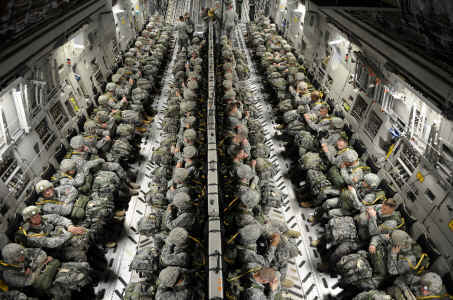 One use for paratroopers has been ignored,
landing atop large buildings during bloody urban warfare fighting. If a platoon is dropped at night in good weather with modern
steerable parachutes, most paratroopers can land safely on large rooftops unknown by those inside a building. Ideally, paratroopers
land on a vacant building a couple blocks behind enemy fighters so they can
secure the building with no fighting. Once defenders of a city learn the enemy
has somehow secured a large building behind them, they are likely to withdraw to
avoid entrapment.
One use for paratroopers has been ignored,
landing atop large buildings during bloody urban warfare fighting. If a platoon is dropped at night in good weather with modern
steerable parachutes, most paratroopers can land safely on large rooftops unknown by those inside a building. Ideally, paratroopers
land on a vacant building a couple blocks behind enemy fighters so they can
secure the building with no fighting. Once defenders of a city learn the enemy
has somehow secured a large building behind them, they are likely to withdraw to
avoid entrapment.
This is dangerous, but much better than grinding street battles fighting door-to-door and up flights of stairs in large buildings. Paratroopers landing atop buildings can completely surprise defenders. This is how German paratroopers quickly seized fortified complexes in Belgium in 1940. This is also valuable for hostage rescue or to capture senior enemy leaders. Paratroopers should be equipped with rope so they can rappel down should their chute become hung on a rooftop object, or to rappel down to a window for covert entry. Precision landings are routinely performed by the US Army's "Golden Knights" parachute demonstration team.
Large scale paratrooper tactics are impractical and dangerous. The US Army pretends that a full division may be airdropped, ignoring the fact that the US Air Force could never assemble enough airlift to support more than a brigade-size drop, and would never fly dozens of large expensive transports near modern enemy forces. Company-size paratrooper operations and below remain valuable for special operations, although they deny Generals and Colonels a chance at glorious assaults with thousands of paratroopers. An army needs no more than one "Ranger" paratroop company per Corps.
Blitzkrieg
Blitzkrieg remains the best strategy to defeat a modern army. The objective of an offensive can vary widely so specific operations are difficult to discuss. While some assume that armored battalions are best to blitzkrieg forward, their high fuel consumption and tracked vehicle maintenance demands limit long-range mobility. It is best for cavalry battalions to charge forth along main roads and engage a disorganized enemy. Should they encounter enemy mobile forces, airpower, artillery, or aircav battalions can chew them up.
One major change since World War II has been the worldwide construction of paved roadways with first-class bridges. The mobility challenge is to advance rapidly on the road network across vital bridges, which a competent enemy will focus his defense, or at least destroy or damage them. Keep in mind that large, modern bridges are not easily destroyed since this requires a ton of explosives and several hours for dozens of skilled engineers to properly place charges. Competent armies often fail at this task due the chaos involved in dealing with an enemy breakthrough. In addition, while engineers are trained to demolish bridges, it is a complex task that they never perform in peacetime, and rarely in wartime, so expertise is lacking and tons of explosives not readily available anyway.
Military theorist, the late Colonel John Boyd, postulated that the best decision making cycle is one where you "Observe, Orient, Decide and Act" or "OODA loop." The idea is that if a military force can act faster than his opponent, it retains the initiative. For mobile forces, this means maintaining offensive momentum so that an enemy does not have time to mine roads, blow bridges, and establish defenses in key terrain. Even the experienced and capable German army was unable to coordinate simple delaying actions after Allied forces broke through in France in 1944. The experienced US Army also fell into a chaotic retreat after the Chinese crossed the Yalu in 1950. Scout companies help manage chaos.
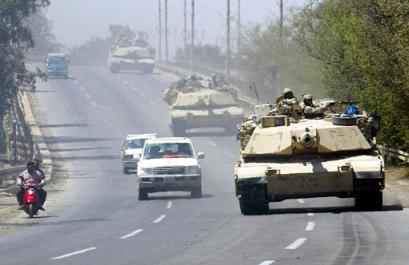 An
army must plan to seize bridges with
surprise. This can be done with helicopter landed troops unless enemy air defenses are effective. Another option
is the use of amphibious units to cross a river at an undefended area
several miles from the bridge and seize it from behind. There is also the night attack
option by using the river cruise tactic. Amphibious vehicles can enter
the river several miles upstream at night, shut their engines off, and drift
with the current using their steering vanes. When they are near the rivers
bank, they can open fire on befuddled bridge guards while they start their
engines and rush ashore.
An
army must plan to seize bridges with
surprise. This can be done with helicopter landed troops unless enemy air defenses are effective. Another option
is the use of amphibious units to cross a river at an undefended area
several miles from the bridge and seize it from behind. There is also the night attack
option by using the river cruise tactic. Amphibious vehicles can enter
the river several miles upstream at night, shut their engines off, and drift
with the current using their steering vanes. When they are near the rivers
bank, they can open fire on befuddled bridge guards while they start their
engines and rush ashore.
Seizing bridges from the far side is always best. If an enemy has readied a bridge for demolition, controls will be on the far side of the bridge. In addition, a surprise attack from the far side will catch enemy forces stuck on the opposite side and on the bridge itself. As a result, an enemy will be reluctant to blow up a bridge, even if ready for demolition as they do not want to kill their buddies. Finally, if the bridge is seized from the far side some enemy forces are trapped. Don't forget that most rail lines and their bridges can serve as roadways too. These can be used to envelop an enemy and clear out a road bridge.
The key objective is to locate and capture enemy and civilian fuel sources. The German army lacked enough fuel for its ambitious 1944 Winter offensive that became known as "The Battle of the Bulge." They planned to use captured American fuel for most of their needs and were successful to an extent, but not enough was seized. With a planet covered with automobiles and civilian gas stations, intelligence should be able to determine which are operating. These should be noted as objectives. However, a wise enemy will set them afire as forces approach, although armies in disarray may not. Soldiers in stealthy scout trucks may dash ahead and quietly secure them. This may mean watching them covertly and only shooting should someone attempt to harm the precious fuel.
Another objective is evaluating water needs. As a general rule, planning to haul water forward is a poor plan. Providing potable water locally can lessen overall supply requirements by 10%. The civilian population is probably drinking potable water. Is that operating? Where are good places to tap in? Do farmers use water wells that can be tapped? Where are good places for water purification units to set up? Ideally, these are with lead units and set up just after a good water point is encountered so they can provide water to passing vehicles. Food can be seized to support advancing forces, but given the local civilian population needs, most store shelves may be empty and seizing scarce food will make soldiers uncomfortable and unpopular.
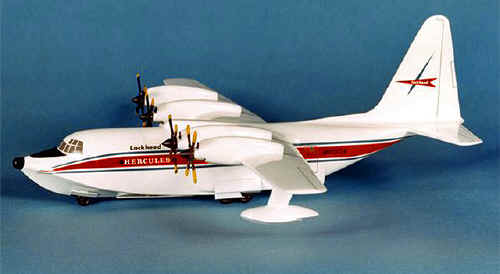 Another objective to consider are locations where fixed-wing aircraft can
land to drop off supplies and evacuate wounded and prisoners. While
helicopters can move supplies by air, aircraft can carry much larger loads, much
faster, and much further. In addition, establishing forward arming and
refueling points for helicopters and propeller support aircraft is
important. Finally, if an army is lucky to have support from CL-130
seaplanes (pictured), there are likely numerous waterways where these can land to support
advancing forces.
Another objective to consider are locations where fixed-wing aircraft can
land to drop off supplies and evacuate wounded and prisoners. While
helicopters can move supplies by air, aircraft can carry much larger loads, much
faster, and much further. In addition, establishing forward arming and
refueling points for helicopters and propeller support aircraft is
important. Finally, if an army is lucky to have support from CL-130
seaplanes (pictured), there are likely numerous waterways where these can land to support
advancing forces.
Mobility Training
It is difficult to discuss future combat scenarios because they vary widely. There is no "Fulda Gap" example common during the Cold War where known units with known weaponry can be compared. In the 1990s, the US Army filled this void with heavy analysis of the "Battle of 73 Eastings," an unimportant engagement toward the end of the 1991 Gulf war when the 2nd Armored Cavalry Regiment (a tank brigade) destroyed an Iraqi armored brigade in the open desert. Not much was learned, except that American tanks were far better than older Soviet equipment, and that software-generated scenarios are fun to play. Artillery and airpower could have been summoned to destroy that Iraqi brigade instead.
One thing the US Army learned in 1991 and 2003 is that it never trains units to blitzkrieg. All unit training is focused on engagements in open terrain. This doesn't prepare units for charging hundreds of miles along roads and dealing with the resulting logistical problems. The US Army should develop a mobility training center where battalions are expected to charge forth and cover a few hundred miles, mostly along roadways filled with cars, while encountering hasty minefields, damaged bridges, and towns with snipers. The unit will be expected to tap a couple civilian gas stations along its route, deal with commandos who cut supply lines, make most of its water, fix broke vehicles, scavenge for fuel, and deal with prisoners. It will capture a small airfield where supplies are flown in and establish a forward arming and refueling point for helicopters.
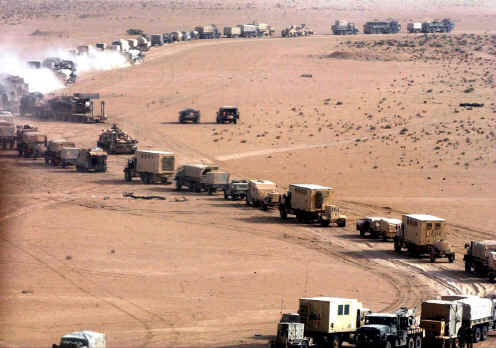 An ideal site for such training is Hawthorne Army Depot in western Nevada.
This was on the Army's 2005 base closing list because it is no longer
needed. However, it was removed from the list since monetary savings were
minuscule due to the impact range cleanup costs. This base has 147,000 acres and 600,000 sq. ft. of floor space that include 178
buildings and 2,427 igloos, and a 49,000-acre live fire ordnance test facility
where units can conduct live firing. Moreover, it is adjacent to the huge Nevada Test and Training range, which is five times larger than Fort
Irwin. Since this is the US Air Force's premier training area, exercises
can coincide as army units trek though hundreds of miles of Nevada
roads.
An ideal site for such training is Hawthorne Army Depot in western Nevada.
This was on the Army's 2005 base closing list because it is no longer
needed. However, it was removed from the list since monetary savings were
minuscule due to the impact range cleanup costs. This base has 147,000 acres and 600,000 sq. ft. of floor space that include 178
buildings and 2,427 igloos, and a 49,000-acre live fire ordnance test facility
where units can conduct live firing. Moreover, it is adjacent to the huge Nevada Test and Training range, which is five times larger than Fort
Irwin. Since this is the US Air Force's premier training area, exercises
can coincide as army units trek though hundreds of miles of Nevada
roads.
The faster combat units move the more difficult they are to target with indirect precision-guided munitions. Rapid movement often panics an enemy as he is unable to make timely decisions. Theorists prefer neat computer models where units move on a game board and moves pondered based on a clear view of enemy units. Generals like wars with perfect clarity provided by sophisticated surveillance and reconnaissance systems. This idea is pushed by aircraft pilots accustomed to an air traffic control system that provides total clarity. Combat in a serious mobile war consists of surprise encounters in which direct fire engagement the first few minutes decides each battle.
Greater mobility is best accomplished by reducing logistical requirements with lighter platforms, fuel-efficient engines, using enemy fuel when possible, and planning to produce water. The problems of moving supplies over road networks can be reduced by using aircraft and helicopters. Logistical requirements can also be slashed by eliminating lumbering howitzers and heavy tanks and their supply train that clog road networks, and using fixed-wing propeller observation aircraft to ensure that firepower is allocated effectively. Mobile air defense systems are needed for aerial defense to deal with UAVs, small helicopters, and loitering precision-guided munitions, while countermeasures and decoys also play a role. Finally, great attention must be focused on securing main supply routes, which means seizing bridges and key terrain before an enemy can destroy, mine, or fortify them.
©2015 www.G2mil.com