The easiest way to improve the power of ground combat battalions is to provide them with their own scout helicopters. Modern armies lack scout helicopters that deploy alongside ground combat units. Helicopter reconnaissance is limited to big, expensive assets based far to the rear. Modern military helicopters have complex systems requiring extensive maintenance and fuel support. They are too large and expensive to permanently attach to frontline units.
As a result, today's ground combat officer often has the same problem as Napoleon, just wanting to know what is on the other side of a hill. He can request aerial reconnaissance, but it may take hours for an aircraft to show up, if one is available. Modern military helicopters cost at least $20 million to buy, $4000 an hour to operate, and are flown by two officers who each cost over $2 million to train. Obviously, these assets cannot be sent to nose around for enemy units whenever a battalion staff is curious. Even if they show up for a few minutes to look around from a safe range, their big engines and large size warns the enemy to hide.
 Unmanned Aerial Vehicles (UAVs) are the current
rage, however their guidance can be jammed, they can't carry personnel, and the
intelligence they provide is what one US Army General described as "just a
screen with no audio to it." They are also easy to shoot down since
the remote pilot is unaware when someone is shooting at it. Combat units need small, inexpensive scout
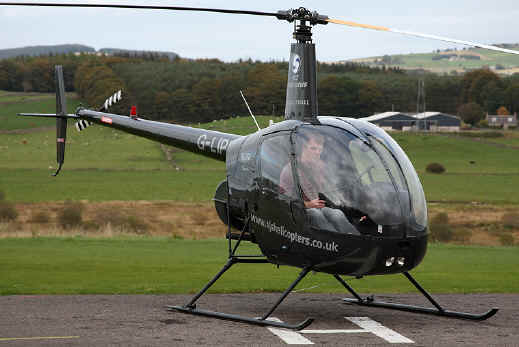
helicopters, like the Robinson R22 (pictured). This cheap helicopter is
simple to fly and easy to maintain. It can be flown by an enlisted man
after just a few weeks of training. Its tiny size and low infra-red signature make it difficult to engage with anti-aircraft systems.
Unmanned Aerial Vehicles (UAVs) are the current
rage, however their guidance can be jammed, they can't carry personnel, and the
intelligence they provide is what one US Army General described as "just a
screen with no audio to it." They are also easy to shoot down since
the remote pilot is unaware when someone is shooting at it. Combat units need small, inexpensive scout
helicopters, like the Robinson R22 (pictured). This cheap helicopter is
simple to fly and easy to maintain. It can be flown by an enlisted man
after just a few weeks of training. Its tiny size and low infra-red signature make it difficult to engage with anti-aircraft systems.
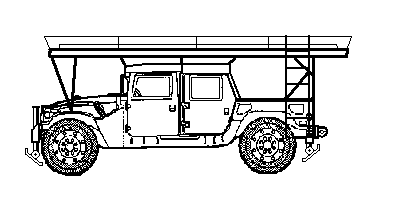
One problem in many areas are landing sites. Landing at night or in bad weather is another challenge. The solution is to build a landing platform atop a truck, like on a HMMWV. (below) It should have an embedded light system to guide the pilot, visible only from above. The helicopter can be strapped down during windy weather and moved about while atop the HMMWV. The HMMWV can also serve as home for the pilot and his mechanic.
 Reconnaissance
would be just one
mission for this tiny helicopter. Frontline units often have urgent needs
for spare parts, batteries, medical supplies, and skilled people. Their scout can dash to the rear to pick up whatever is needed. Evacuating
wounded and snatching downed pilots are other missions where scouts prove
valuable. Forward air controllers and artillery observers instantly
recognize the value of scout helicopters. Eventually, battalions may
demand a dozen light scouts to fill all needs.
Reconnaissance
would be just one
mission for this tiny helicopter. Frontline units often have urgent needs
for spare parts, batteries, medical supplies, and skilled people. Their scout can dash to the rear to pick up whatever is needed. Evacuating
wounded and snatching downed pilots are other missions where scouts prove
valuable. Forward air controllers and artillery observers instantly
recognize the value of scout helicopters. Eventually, battalions may
demand a dozen light scouts to fill all needs.
Air Force officers may worry about hundreds of small helicopters moving about without flight plans and centralized air control. However, scouts could be limited to certain areas and altitudes. Their slow speed and tiny radar signature make them easy to identify. Others will express concern about the useful payload of an ultra-light scout, which is only 400 lbs for the Robinson R22. They may favor larger scouts like the MH-6 "Little Bird" (below) used by US Special Operations forces so that dozens of expensive high-tech gadgets can be added.
 However, the value of the scout is its low
cost, low fuel usage, and simplicity. Combat battalions already have binoculars,
infrared viewers, machine guns, radios and whatever the scout passenger needs for a particular
mission. Defense contractors will cringe at this idea of purchasing commercial
helicopters without fitting each with millions of dollars in gear, but the scout
passenger can carry anything he needs onboard. Scouts fly
tough and dangerous missions, and many will be lost to accidents, enemy fire,
and even artillery fire. These scouts will be unarmored, but will have
great agility to avoid enemy fire. Scout missions may seem
dangerous to officer pilots who now "command" helicopters, but not to
sergeants who once scouted on foot.
However, the value of the scout is its low
cost, low fuel usage, and simplicity. Combat battalions already have binoculars,
infrared viewers, machine guns, radios and whatever the scout passenger needs for a particular
mission. Defense contractors will cringe at this idea of purchasing commercial
helicopters without fitting each with millions of dollars in gear, but the scout
passenger can carry anything he needs onboard. Scouts fly
tough and dangerous missions, and many will be lost to accidents, enemy fire,
and even artillery fire. These scouts will be unarmored, but will have
great agility to avoid enemy fire. Scout missions may seem
dangerous to officer pilots who now "command" helicopters, but not to
sergeants who once scouted on foot.
This is not a new idea. During the 1950s, the 10th Marine artillery regiment experimented with attaching tiny scout helicopters to an artillery battery for use by forward observers. The test was considered extremely successful, but the idea was never adopted because senior aviation officers insisted on centralized control of all air assets and buying only the best "big" aircraft. However, this limits the flexibility and responsiveness of ground combat units. If a battalion approaches a hill and the commander needs to know what is on the other side, he cannot wait for requested support. Modern light helicopters are high-tech with the latest engines and designs. The R22 costs just $200,000 and requires no research and development money. Hopefully, Generals will recognize their value and purchase hundreds of scout helicopters "off-the-self" and deliver them to frontline combat units.
©2015 www.G2mil.com